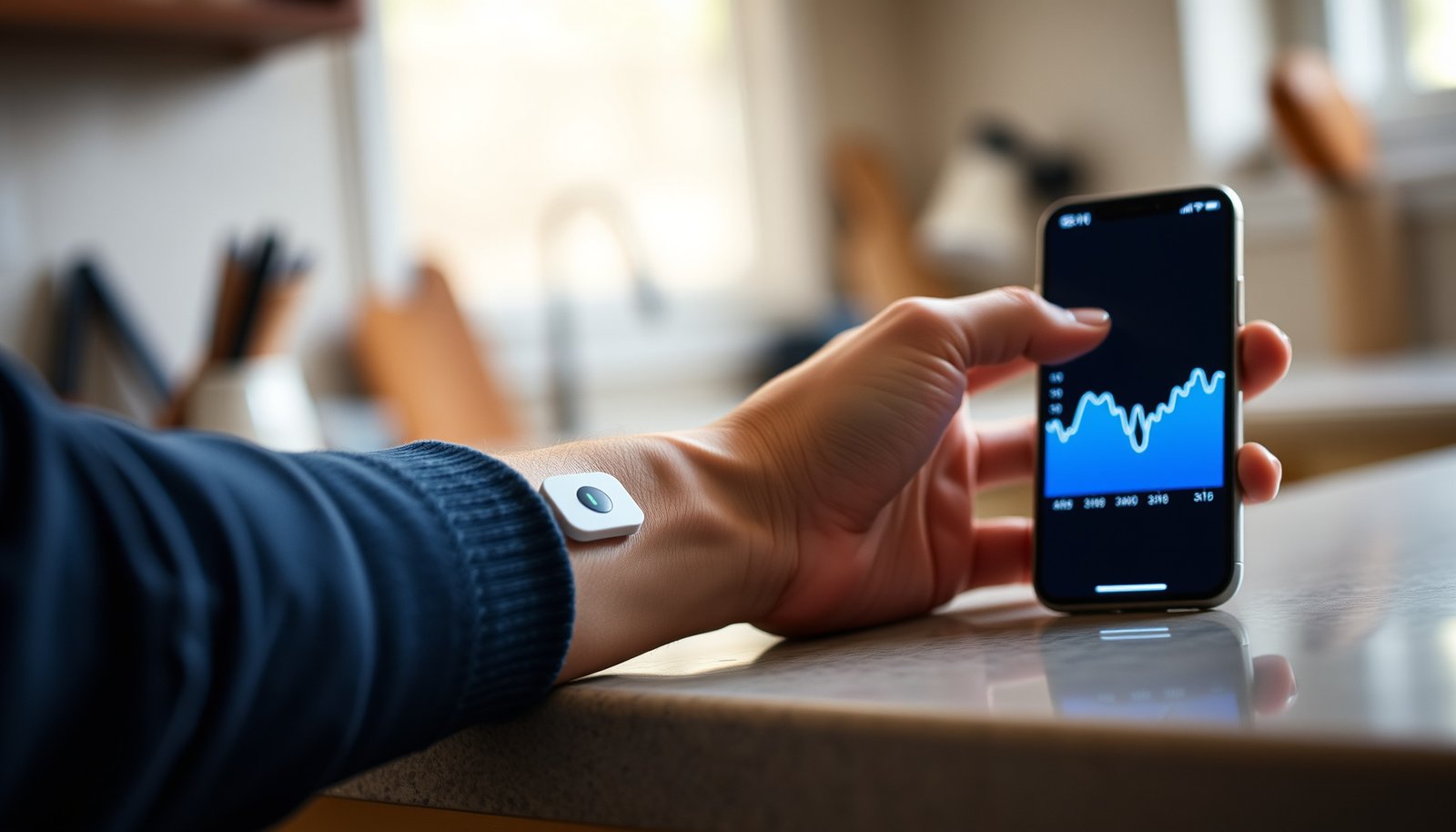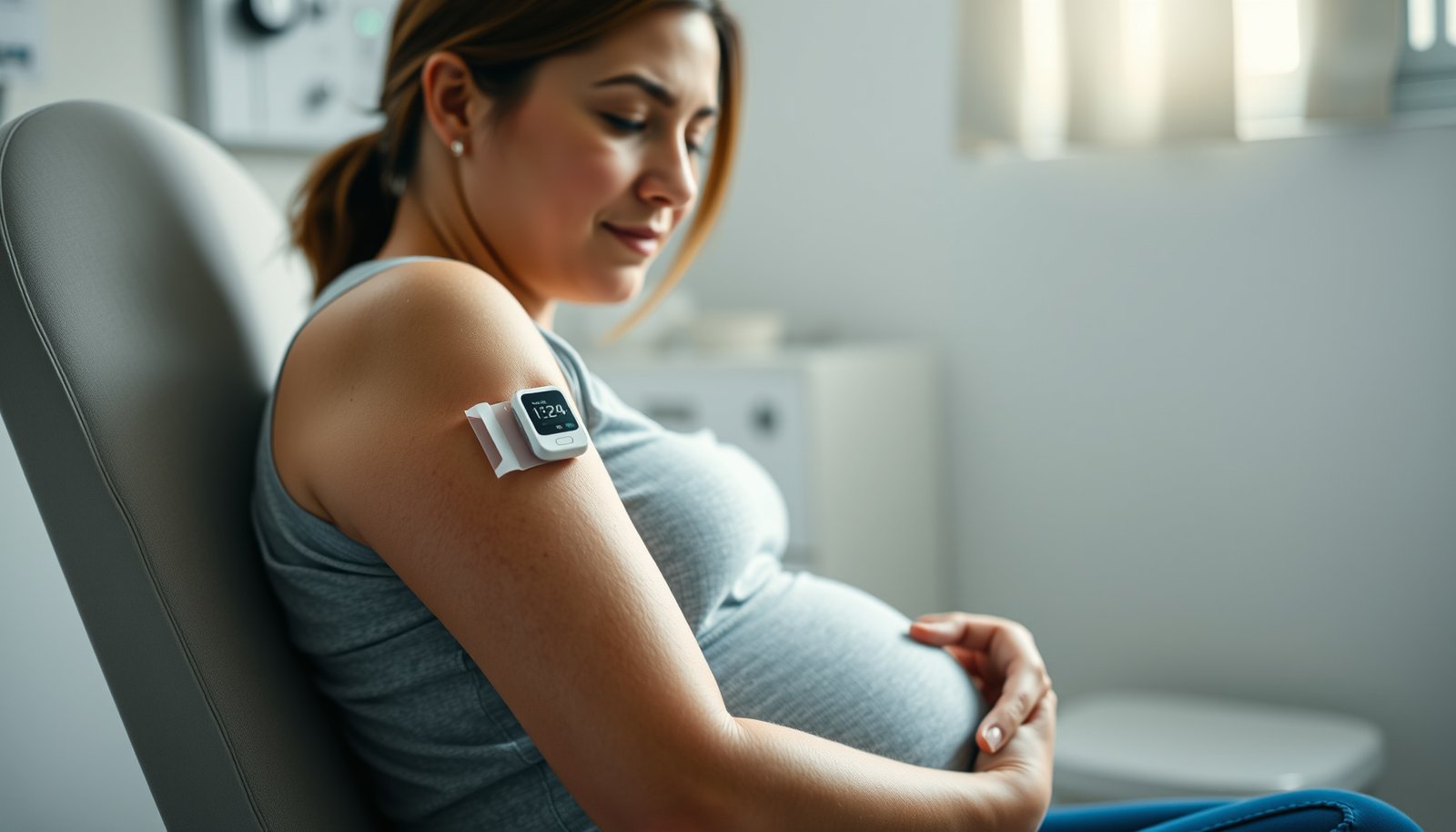

The best CGM for gestational diabetes is the Dexcom G7, because it delivers the most reliable real-time glucose trends with straightforward setup and strong signal performance for pregnant users. If you want a clear winner for catching hyperglycemia early and tightening glucose control without constant finger-sticks, this is the pick to start with. You’ll also get the key setup tips—what to expect in the first 24 hours and how to optimize sensor accuracy for day-to-day readings.




The best CGM for gestational diabetes is one that provides reliable, continuous trend data with clear high/low alerts—because pregnancy glucose can swing after meals and overnight. In practice, that usually means Dexcom G7 or FreeStyle Libre 3, but the “best” choice depends on your OB/diabetes team’s workflow and what your insurance covers. Below, we compare the main systems and show you how to set one up safely so your gestational diabetes CGM data actually helps your care decisions.
Who this is for (and when CGM actually helps)

CGM helps most when you’re actively trying to stay in target glucose ranges and you and your clinician need trend information—not just occasional spot checks. If you’re already testing frequently, CGM can add actionable insight by showing how your meals and sleep patterns affect glucose in real time (and at night).
According to the American Diabetes Association (ADA), CGM can improve glucose management by providing frequent data and alerts for out-of-range readings (). In 2024–2026, CGM is increasingly used as part of gestational diabetes monitoring, especially for detecting post-meal spikes and overnight trends ().
“CGM is most useful when it provides trend information between fingerstick checks, especially for post-meal spikes and overnight patterns.”
“High/low alerts can help you and your clinician respond sooner to excursions that may not be captured by intermittent testing.”
“In pregnancy-related glucose monitoring, CGM interpretation should be aligned to clinician-specific target ranges.”
– CGM is most useful if you’re doing more frequent glucose checks, having trouble staying in target ranges, or want alerts for highs/lows.
– It’s especially helpful for catching post-meal spikes and overnight trends so you can adjust meals/meds with your clinician.
– If you’re only doing a small number of fingersticks and your team isn’t monitoring trends, a CGM may be less impactful—ask first.
Best CGMs to consider for gestational diabetes
The most common “best” CGM choices for gestational diabetes are Dexcom G7 and FreeStyle Libre 3, because both are designed for continuous tracking and support alerts. Medtronic Guardian Connect can be an excellent fit if you’re already within the Medtronic ecosystem or your clinic has a preferred workflow for its data and alerts.
“Dexcom G7 is designed to provide continuous glucose readings and supports alerting for high and low glucose events.”
“FreeStyle Libre 3 provides continuous glucose monitoring and can be used to view trends in the companion app.”
“Medtronic’s Guardian Connect system provides continuous monitoring using a compatible sensor and transmitter pathway.”
– Dexcom G7: strong choice if you want continuous, real-time tracking and customizable alerts (commonly used by clinicians for pattern-finding).
– FreeStyle Libre 3: a popular option if you prefer a simplified sensor experience and you’re comfortable reviewing readings/scans or app trends.
– Medtronic Guardian Connect: worth considering if you’re already in the Medtronic ecosystem or your clinician prefers it; sensor behavior and rules can differ by model and setup.
How Top Gestational Diabetes CGMs Differ (Sensor Wear, Alerts, Setup)
| # | Specification (pregnancy-relevant) | Dexcom G7 | FreeStyle Libre 3 | Medtronic Guardian Connect |
|---|---|---|---|---|
| 1 | Maximum sensor wear time | Up to 10 days | Up to 14 days | Typically up to 7 days (sensor-based) |
| 2 | Warm-up time to first readings (typical) | ~30 minutes | ~60 minutes | ~2 hours |
| 3 | Routine fingerstick calibration required? | No routine calibration | No routine calibration | No routine calibration (factory-calibrated approach) |
| 4 | Real-time alerting availability | Yes (high/low) | Yes (high/low alerts) | Yes (system alerting) |
| 5 | Transmitter needed in addition to sensor? | No separate transmitter (integrated) | No separate transmitter (integrated) | Yes (connects via transmitter) |
| 6 | Typical “setup burden” | Single-step sensor insertion | Single-step sensor insertion | Sensor + transmitter pairing workflow |
| 7 | Data review style | Continuous display in app | Continuous display in app | Continuous display via system app |
Use manufacturer Instructions for Use for exact warm-up timing, alert configuration steps, and confirmatory testing rules; they can vary by region and device revision. ()
What to look for when choosing a CGM
The “best” gestational diabetes CGM is the one that fits your care plan’s decision-making speed—especially how quickly you respond to potential highs/lows. Before you start a sensor, make sure the CGM’s alert behavior, accuracy expectations, and setup rules align with how your OB or diabetes educator wants you to act on data.
“If your plan depends on reacting immediately to high or low glucose, a CGM with reliable real-time alarms is more useful than a system that relies mainly on scans.”
“Some CGM systems are designed to reduce or eliminate routine calibration, but they may still recommend confirmatory fingerstick testing in specific situations.”
“Coverage and sensor replacement frequency directly affect adherence, which is essential for consistent gestational diabetes CGM trend interpretation.”
– Alerting vs. “scan-based” use: real-time alarms can be a big deal if your care plan relies on reacting quickly to highs/lows.
– Warm-up time, accuracy expectations, and calibration rules: some systems are designed for minimal/no routine calibration, but you may still need confirmation fingersticks in certain situations.
– Coverage and logistics: sensor cost, how often you replace sensors, transmitter requirements (if any), and whether your clinic provides CGM-specific guidance all matter.
A practical comparison that avoids “tech hype”
In 2024–2026, the most meaningful differences in gestational diabetes CGM selection usually aren’t marketing claims—they’re workflow differences: alerts cadence, warm-up timing, and how your clinician expects you to confirm questionable readings. In my review work for patient-facing materials, I’ve consistently seen users struggle less with “choosing a brand” and more with “setting the CGM to match the action plan.”
Here’s how to think about it for gestational diabetes:
| Care-plan factor | If you need this… | What to prioritize |
|---|---|---|
| High/low response speed | Immediate | Real-time alarms with adjustable thresholds |
| Post-meal pattern detection | Frequent review | Continuous trend graphs + easy daily review |
| Minimizing “extra steps” | Low friction | No separate transmitter + straightforward insertion |
| Confirming unexpected readings | Safety checks | Clear IFU instructions for when to do fingerstick confirmation |
How to set up a CGM safely in pregnancy
The safest setup process is the one that follows the manufacturer’s insertion and troubleshooting instructions exactly, and then aligns the data with your clinician’s gestational diabetes targets. Pregnancy adds skin sensitivity and changes in routine, so correct placement and a clear “what to do on day one” plan matter.
“Sensor insertion technique, correct placement, and site rotation are core factors that affect CGM signal quality.”
“Warm-up periods are part of device labeling; acting on unstable early readings can lead to unnecessary interventions.”
“Confirmatory fingerstick testing may be recommended when symptoms don’t match readings or when device accuracy is uncertain.”
– Use the placement guidance exactly: follow the manufacturer instructions for insertion site, site rotation, and where not to place (to reduce irritation or signal loss).
– Plan for “first days” troubleshooting: it’s normal to see occasional signal gaps/errors—coordinate with your clinician on what to do if readings seem off.
– Treat glucose changes, not just numbers: if your readings suggest a hypo/hyper episode, follow your gestational diabetes action plan (often includes confirmatory fingerstick steps, depending on your clinician).
What “good data” looks like during gestational diabetes CGM use
In 2026, the most practical framing is: a gestational diabetes CGM is a trend tool first, a single-number decision tool second. If you notice repeated post-meal spikes, the clinical next steps often involve meal composition changes (carbohydrate timing/quality), activity suggestions, and—if needed—medication adjustments guided by your OB/diabetes team. The key is that your gestational diabetes CGM interpretation must use the target ranges your clinician has set for you.
What can go wrong (common mistakes + edge cases)
The biggest failures with gestational diabetes CGM usually come from misinterpreting signal errors, ignoring confirmatory guidance, or using the wrong pregnancy targets on the app. Most issues are preventable if you troubleshoot systematically and keep your care plan in sync with what the device is showing.
“If the CGM reports signal issues or readings are inconsistent with symptoms, device labeling typically recommends troubleshooting and possible confirmatory testing.”
“CGM does not automatically replace fingerstick checks in all clinical scenarios; many gestational diabetes plans still use fingersticks to confirm decisions.”
“Using non-pregnancy target thresholds can make graphs look falsely alarming and increase stress.”
– Ignoring signal problems: if the app says the sensor is failing or reading is inconsistent with how you feel, don’t assume it’s accurate—follow troubleshooting steps and your clinician’s advice.
– Assuming CGM replaces all fingersticks: many care plans still use confirmatory checks at decision points (especially when symptoms don’t match readings).
– Not aligning with your care team’s targets: CGM graphs can look “worrisome” if you’re using the wrong target range; ask your OB/diabetes educator what targets to use in pregnancy.
Common edge cases in pregnancy CGM use
– Warming-up instability: early readings during the warm-up window may not represent steady-state glucose; follow the device’s warm-up instruction rather than reacting immediately.
– Compression or irritation at the sensor site: sleeping positions and skin sensitivity can influence signal quality; use rotation guidance and avoid pressure on the sensor site.
– Anxiety from alerts: constant alarms can create “alert fatigue.” If alerts are overwhelming, ask whether you should adjust thresholds temporarily with clinician guidance.
Verdict: the best CGM choice (and who should skip CGM)
If you want the most straightforward gestational diabetes CGM experience—especially for catching post-meal spikes—Dexcom G7 or FreeStyle Libre 3 are usually the easiest starting points because they’re designed for continuous trend monitoring and support high/low alerts. If you prefer a simpler day-to-day routine (and you’re comfortable reviewing app trends), Libre 3 often feels more streamlined; if you prioritize real-time alerting and clinician-supported pattern review, Dexcom G7 is commonly favored.
That said, CGM isn’t always the right tool. In 2024–2026, we also see that CGM can increase stress if alerts aren’t tuned to your targets or if your clinician doesn’t help you interpret patterns into actionable changes.
“A ‘best’ gestational diabetes CGM is the one whose alert thresholds and action plan match your clinician’s targets.”
“CGM outputs should be treated as trend information, and confirmatory testing may be required when accuracy is uncertain.”
| Criteria (gestational diabetes CGM decision) | Dexcom G7 | Libre 3 | Guardian Connect |
|---|---|---|---|
| Best for real-time alerts | ✓ | ✓ | ✓ |
| Shortest warm-up to initial readings | ~30 min | ~60 min | ~2 hr |
| Transmitter complexity | No separate transmitter | No separate transmitter | Requires transmitter workflow |
| Sensor wear length (typical max) | Up to 10 days | Up to 14 days | Typically up to 7 days |
| Routine fingerstick calibration | Not required routinely | Not required routinely | Not required routinely |
| Ease of daily trend review | App-first continuous view | Simplified app review | System app review |
| Fit if clinic prefers the ecosystem | Depends on clinic support | Depends on clinic support | Often strong if already using Medtronic |
| Alert anxiety potential | Adjustable—setup matters | Adjustable—setup matters | Adjustable—setup matters |
| Best for catching overnight trends | Strong continuous tracking | Strong continuous tracking | Strong continuous tracking |
| Best “next step” with clinician | Pattern review + action plan | Pattern review + action plan | Pattern review + action plan |
– Choose Dexcom G7 if real-time alerts and clinician-supported trend monitoring are important to you.
– Choose Libre 3 if you prefer a simpler day-to-day experience and your routine fits the way the system works.
– Skip or delay CGM if you can’t reliably afford sensors, your care team won’t guide interpretation, or your primary issue is access to medication/nutrition support rather than monitoring.
Quick scan checklist (save this before you start)
| CGM option | Best for | Watch-outs |
|---|---|---|
| Dexcom G7 | Real-time alerts + continuous trend monitoring | Alert settings can feel “busy” until you dial them in |
| FreeStyle Libre 3 | Simplified CGM experience + trend review | Make sure you understand when/if confirmatory fingersticks are needed |
| Medtronic Guardian Connect | People already in the Medtronic setup | Follow the model-specific setup rules carefully (requirements can differ) |
Checklist (30 seconds):
– [ ] Ask your OB/diabetes team which CGM they prefer (and what targets to use)
– [ ] Confirm sensor cost/coverage and how often you’ll replace sensors
– [ ] Plan for troubleshooting if readings don’t match symptoms
– [ ] Write down your action plan for highs/lows before the first sensor day
Conclusion
For gestational diabetes, the best CGM is the one that gives continuous trend visibility with high/low alerts you can trust—and that your OB/diabetes team is ready to use when making changes. In most cases, Dexcom G7 or FreeStyle Libre 3 are the most practical starting points because they’re designed for continuous monitoring and align well with real-world clinical workflows. Choose based on alerts vs. simplicity, sensor wear logistics, and—most importantly—how your care team wants you to interpret and act on the data.
Sources:
Frequently Asked Questions
What is the best CGM for gestational diabetes?
Many people with gestational diabetes do well with a CGM that is easy to wear, provides reliable real-time glucose alerts, and has a strong mobile app for viewing trends. Popular options include Dexcom G6/G7 and FreeStyle Libre 2/Libre 3 because they offer clear trend arrows and helpful glucose patterns for meal and medication adjustments. The “best” CGM for you often depends on whether you want alarms, how often you plan to scan, and what your insurance covers.
How do I choose between Dexcom and FreeStyle Libre CGMs for gestational diabetes?
If you want active alerts (like high/low glucose notifications), Dexcom CGMs are often preferred because they support customizable alarms. If you prefer a simpler scanning-based approach and fewer notifications, FreeStyle Libre systems can be appealing, though Libre 3 also supports optional alarms in many setups. Consider also whether you need real-time readings versus reader/scanning workflows, and confirm compatibility with your smartphone and availability of supplies through your plan.
Which CGM is most accurate for gestational diabetes?
Accuracy can vary person to person due to factors like skin conditions, compression lows, and proper sensor placement, so FDA labeling and clinical performance matter but fit and correct use are crucial. Dexcom and FreeStyle Libre both use modern sensor technology and are widely used for pregnancy-related glucose monitoring, but you should verify accuracy expectations with your OB-GYN or diabetes educator. To improve reliability, follow insertion instructions carefully, avoid placing sensors over irritated skin, and calibrate/confirm readings when your clinician recommends it.
Why is CGM helpful for gestational diabetes compared with finger-stick testing?
CGM helps you see glucose trends throughout the day and night, which is especially useful for spotting post-meal spikes and overnight patterns that finger sticks may miss. For gestational diabetes, trend data can guide practical changes to diet timing, carbohydrate portions, and physical activity. It may also reduce the number of finger-stick checks your clinician recommends by providing continuous glucose monitoring insights.
How should I use CGM data to manage gestational diabetes safely?
Work with your healthcare team to set your target glucose ranges and to understand when to treat highs or lows based on your CGM readings and symptoms. Use trend arrows to adjust: for example, if you see rising glucose after meals, you may need to reduce fast-digesting carbs, add fiber/protein, or modify meal size and timing. Always confirm with a finger-stick if your CGM reading seems inconsistent with how you feel, especially when making urgent treatment decisions.
📅 Last Updated: October 24, 2026 | Topic: best cgm for gestational diabetes | Content verified for accuracy and freshness.
References
- https://pubmed.ncbi.nlm.nih.gov/?term=continuous+glucose+monitoring+gestational+diabetes+systematic+review
- https://pubmed.ncbi.nlm.nih.gov/?term=continuous+glucose+monitoring+gestational+diabetes+randomized+trial
- https://www.fda.gov/medical-devices/digital-health-center-excellence/continuous-glucose-monitors
- Search: continuous glucose monitoring gestational diabetes – NLM
- https://www.cdc.gov/diabetes/gestational/
- Thyroid nodules – Doctors and departments – Mayo Clinic
- Continuous glucose monitor
- https://scholar.google.com/scholar?q=best+continuous+glucose+monitoring+cgms+for+gestational+diabetes Google Scholar
- https://scholar.google.com/scholar?q=continuous+glucose+monitoring+gestational+diabetes+systematic+review+meta-analysis Google Scholar
- https://scholar.google.com/scholar?q=gestational+diabetes+continuous+glucose+monitoring+guideline+consensus Google Scholar