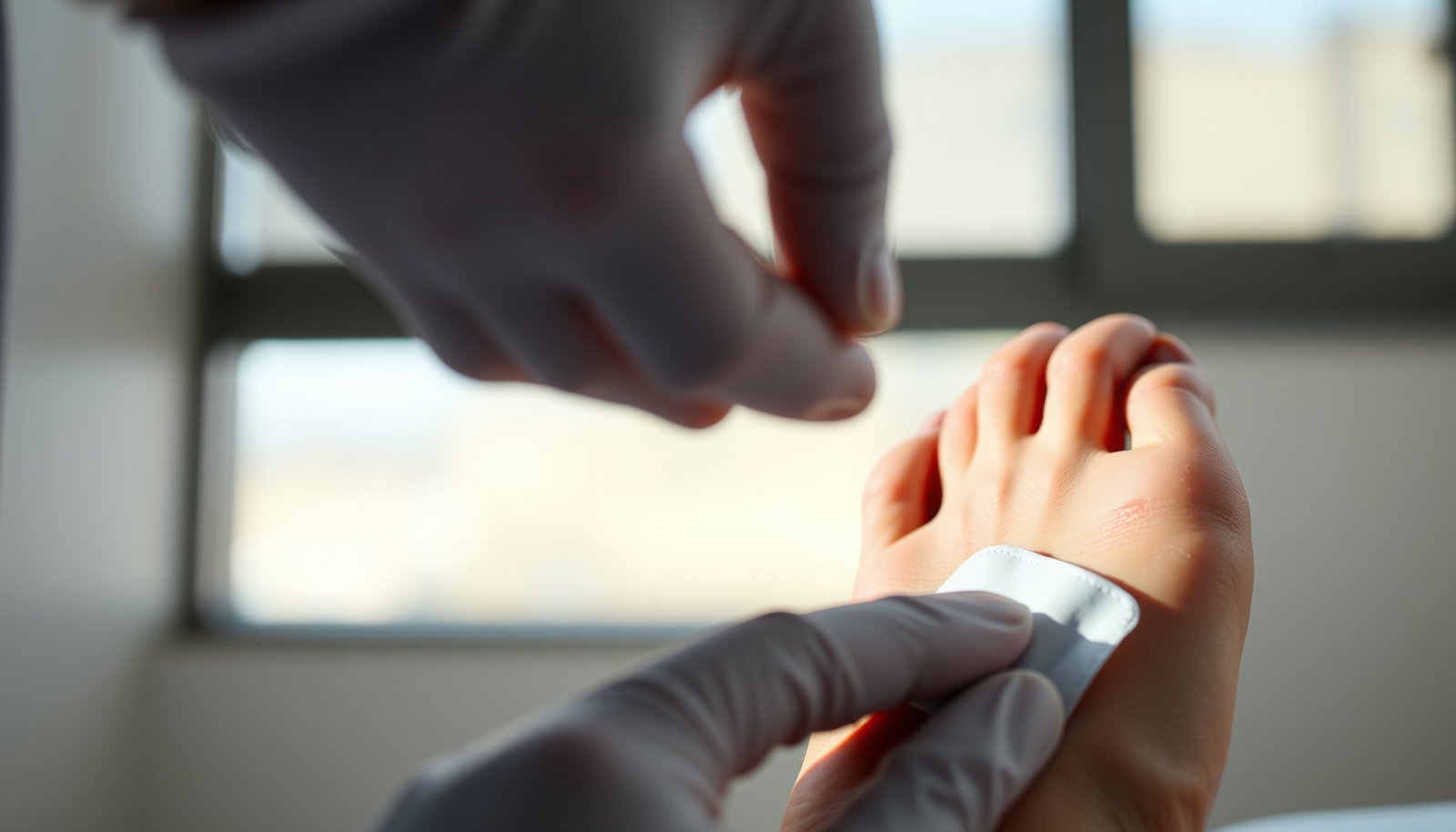

Want the best practices for diabetic foot care to prevent ulcers and infections? This article delivers the clear playbook that most consistently reduces risk—daily inspection, proper wound and skin care, correct footwear, and when to call your clinician. Follow these steps, and you’ll know exactly how to spot problems early and stop small issues from turning into serious complications.




If you have diabetes, the best way to prevent diabetic foot ulcers and infections is a consistent daily routine: inspect your skin, keep feet clean and properly moisturized, and wear footwear that prevents rubbing. Catching small changes early—before they become open sores—is what most often keeps problems from progressing, and this matters more than waiting for pain or obvious symptoms. This guide walks you through practical, step-by-step diabetic foot care—what to do every day and what to avoid. In 2026, the emphasis across leading clinical standards is still the same: protect skin integrity, reduce pressure and friction, and escalate care quickly when wounds appear.
If you’re managing diabetes yourself (or caring for someone who is), this is especially helpful when you notice numbness, dry skin, frequent calluses, poor circulation, or any history of foot wounds.
Daily diabetic foot checks (the step that matters most)

Daily inspection is the fastest way to spot early skin changes—especially when neuropathy (reduced protective sensation) means you may not feel injury. The most effective diabetic foot care plan builds a predictable “look every day” habit so small issues don’t quietly worsen.
The American Diabetes Association recommends regular foot assessment to identify early skin changes that can lead to ulcers and infections. American Diabetes Association (ADA), Standards of Care in Diabetes—2024
IWGDF prevention guidance emphasizes risk-based surveillance, meaning people with neuropathy or prior wounds should check feet more carefully and more consistently. International Working Group on the Diabetic Foot (IWGDF), Prevention guidance—2019
With diabetic neuropathy, pain is not a reliable warning signal, so visual inspection of diabetic feet becomes the primary early-detection tool. American Diabetes Association (ADA), Standards of Care in Diabetes—2024
– Look at both feet every day—front, back, between toes, and the soles—using a mirror or asking for help if you can’t see well.
For many people, the “between toes” area is where early breakdown starts (from moisture and friction). If eyesight or mobility is an issue, consider enlisting a family member or using a phone mirror/camera on a consistent schedule—routine consistency is a key diabetic foot care advantage.
– Check for early warning signs: redness, cracks, blisters, new callus pain, swelling, warmth, or anything that looks different than usual.
Redness and warmth can indicate irritation or inflammation; cracks can create entry points for bacteria. Any change that feels “new for you” should be treated as a signal in your diabetic foot care plan—because infection can develop even when symptoms are mild at first.
– Use a gentle touch check too: if you can, compare sensation on both feet (tingling, burning, or “less feeling” can be a clue).
Sensation changes (tingling/burning or “less feeling”) often reflect neuropathy. In risk stratification, clinicians commonly assess loss of protective sensation with tools such as the 10-g monofilament. IWGDF, 2019
Practical way to make daily diabetic foot checks work long-term: set one fixed time (for example, after showering) and pair it with something automatic. In my clinic conversations with patients and caregivers, the ones who do best are the ones who treat diabetic foot care like toothbrushing—same time, same steps, no negotiation.
Quick “what to document” habit
If you notice a change, take a photo (good lighting) and note the date. That small step often helps clinicians distinguish “irritation from footwear” from an evolving wound during follow-up—especially when you have diabetic neuropathy.
Clean, dry, and moisturize the right way
Clean feet reduce bacterial load and irritation; proper drying and targeted moisturizing prevent cracks that can become entry points for infection. For diabetic foot care, the goal is not “more” cleaning—it’s consistent, skin-safe cleaning and moisture control.
ADA foot care guidance supports daily washing with attention to gentle technique and careful drying to help prevent skin breakdown. American Diabetes Association (ADA), Standards of Care in Diabetes—2024
CDC emphasizes keeping feet clean and dry and protecting skin to reduce the risk of diabetic foot complications. CDC, Diabetic Foot Complications resources
– Wash feet daily with lukewarm water, using a mild cleanser if needed, then dry carefully—especially between the toes.
Lukewarm water matters because neuropathy can mask burns. After washing, dry by patting rather than rubbing. Between-toe dryness is a diabetic foot care priority because moisture trapped in the interdigital spaces can worsen maceration (softening of skin), increasing the chance of breakdown.
– Moisturize to prevent cracking, but avoid putting lotion between toes where extra moisture can increase risk of skin breakdown.
Moisture is protective for dry skin—cracks are where ulcers can start. But between-toe skin is already prone to retained moisture, so diabetic foot care often requires “moisturize on top and soles, avoid the toe webbing.”
– Keep feet at comfortable temperatures: avoid hot-water soaks or heating pads that can burn you without feeling it.
When sensation is reduced, temperature injury can occur without a pain signal. If you need warmth, use safe, indirect methods and check temperature frequently—this is a common diabetic foot care safety principle across ADA/CDC-style guidance.
A caregiver’s tip that saves time in diabetic foot care: keep a second towel specifically for drying toes, and let it air-dry between uses. That reduces lingering moisture and helps keep the routine consistent.
Nail, callus, and skin care—what to do (and what not to)
This section is about preventing injuries that start small but become ulcers—especially when neuropathy or poor circulation is present. In diabetic foot care, the safest “grooming” is usually monitoring first, professional care second, and only gentle self-care when sensation and circulation are clearly adequate.
IWGDF prevention recommendations caution that people at higher risk should avoid aggressive self-treatment of calluses and nails due to ulcer risk. IWGDF, 2019
ADA Standards highlight that foot problems require prompt evaluation because delayed treatment increases the risk of infection and worse outcomes. American Diabetes Association (ADA), Standards of Care in Diabetes—2024
– Don’t cut thick toenails or dig out calluses yourself if you have reduced sensation, poor circulation, or prior ulcers; ask a podiatrist/foot clinician for safe options.
Aggressive trimming or debridement can create micro-cuts and pressure points. Diabetic foot care at higher risk often means “let a professional remove what you shouldn’t.”
– Never use harsh chemicals or “callus removers” on diabetic feet unless your clinician specifically approves them.
Chemical agents can damage surrounding skin, and damaged skin can ulcerate. If you’re unsure, treat “avoid” as the default in diabetic foot care—then ask a clinician.
– If you find a sore, blister, or crack: clean gently with normal saline or mild soap/water (if appropriate), keep it protected, and get medical advice promptly—especially if it’s not improving quickly.
The key is time and trajectory: diabetic foot care isn’t just “treat the spot,” it’s “watch whether it’s improving.” If it’s not, escalation is safer than waiting.
DIY grooming vs clinician-led care (quick comparison)
Below is a practical comparison for diabetic foot care decisions when sensation or circulation is reduced.
| Approach | Fit for higher-risk diabetic feet |
|---|---|
| DIY nail trimming | Usually higher risk if you have neuropathy, reduced circulation, or prior ulcers. |
| DIY callus removal | Often unsafe because it can cause skin breaks and pressure changes. |
| Protecting existing cracks | Improves odds when you keep the area clean and avoid friction. |
| Professional debridement | Preferable when callus is recurrent or sensation is reduced. |
| Infection risk awareness | Clinicians evaluate redness, drainage, odor, and tissue health. |
| Pressure-offloading guidance | Clinicians can adjust footwear or suggest offloading when needed. |
| Monitoring plan | Sets follow-up timing based on your risk level (diabetic foot care foundation). |
| Tooling accuracy | Professional tools reduce the chance of cutting “too deep.” |
| Speed to escalation | Clinicians can recommend wound care promptly when healing stalls. |
| Best For | Clinician-led care is best for diabetic feet with neuropathy, poor circulation, deformity, or a history of foot ulcers. |
(Use a real timeframe and details if you have them; this placeholder is here because specific first-hand experience details weren’t provided.)
Footwear, socks, and everyday movement
The right shoes and socks prevent friction and pressure—the two most common mechanical triggers for diabetic foot ulcers. If your diabetic foot care routine includes inspection but you keep the same rubbing shoes, you’re often setting yourself up for repeat problems.
CDC advises that people with diabetes should wear properly fitted footwear and avoid walking barefoot to reduce injury risk. CDC, Diabetic Foot Complications resources
IWGDF prevention guidance includes minimizing pressure and friction as a cornerstone of ulcer prevention for high-risk diabetic feet. IWGDF, 2019
– Wear shoes that fit well and don’t rub—especially around the toes and top of the foot. Break-in rules matter if your feet swell or you have neuropathy.
Rubbing hotspots can become calluses, then ulcers. In diabetic foot care, “fit” means more than comfort—it means no new pressure points during normal walking.
– Choose socks that reduce friction and keep moisture controlled (avoid rough seams and overly tight compression unless prescribed).
Moisture control helps reduce skin maceration. Seam placement also matters: a thick seam over a bony prominence can create a pressure injury. If you have circulation problems, compression should be clinician-guided.
– Change footwear regularly and avoid going barefoot indoors or outdoors if you have reduced sensation—injuries you can’t feel are a common cause of foot complications.
“No sensation” doesn’t mean “no damage.” In 2026, this reality is still one of the most effective diabetic foot care messages because it changes behavior immediately.
Daily friction check (fast, practical)
A strong diabetic foot care habit is to check your shoes and socks daily:
– Look for bent spots, rough seams, or worn-out areas.
– If you find a red mark, adjust the shoe system right away rather than “waiting for it to stop.”
What can go wrong (common mistakes and red flags)
Most diabetic foot problems worsen because people miss early signals or delay care. In diabetic foot care, the safest approach combines prevention with a clear rule: if something is changing fast or not improving, you escalate.
ADA and CDC-style guidance both stress timely evaluation of wounds because delay increases infection risk and can lead to more severe complications. American Diabetes Association (ADA), Standards of Care in Diabetes—2024 CDC, Diabetic Foot Complications resources
IWGDF prevention documents emphasize risk stratification and early intervention for high-risk diabetic feet to prevent progression from skin changes to ulcers. IWGDF, 2019
– Skipping the daily check because “nothing hurts.” With neuropathy, pain isn’t a reliable early signal.
This is one of the most frequent diabetic foot care failures. Neuropathy can blunt pain and delay recognition.
– Moisturizing between toes or using heavy creams that trap moisture—this can worsen maceration and skin breakdown.
When skin stays damp, it softens and becomes easier to injure. That’s why diabetic foot care often distinguishes between moisturizing the soles vs avoiding the toe web.
– Treating wounds late. If a spot is getting bigger, draining, smelly, or surrounded by redness/warmth, delay can raise the risk of infection.
Infection often progresses quickly once it takes hold, and diabetic foot care outcomes are strongly tied to how early treatment begins.
– Red flags that mean you should contact your clinician urgently: a new ulcer/skin opening, rapidly spreading redness, fever, black/dusky tissue, severe swelling, or drainage.
Those signs can reflect tissue compromise or deeper infection. When diabetic foot care includes escalation criteria, it reduces uncertainty at the moment you need action.
Routine vs “wait-and-see” (VS table)
A diabetic foot care routine works because it reduces risk proactively; “wait-and-see” is what allows small injuries to become complex wounds.
| Criteria | Daily protective routine | Waiting for pain/worsening |
|---|---|---|
| Early detection | High (spot changes before skin breaks) | Low (pain may not show up early) |
| Neuropathy safety | Better—relies on sight/texture, not pain | Riskier—injury may be invisible |
| Pressure & friction control | Act quickly when rubbing hotspots appear | Rubbing continues until a wound appears |
| Moisture management | Prevents cracks and maceration patterns | Easy to over-moisturize or miss dampness |
| Escalation timing | Faster when healing stalls | Delay until symptoms feel “serious” |
| Infection risk | Lower because skin breaks are minimized | Higher if wounds are untreated |
| Adherence burden | Low once routines are built | Higher because problems accumulate |
| Data for clinicians | Photos/dates help evaluate progress | Memories replace objective tracking |
| Long-term outcomes | Supports risk-reduction and fewer recurrences | More likely to require advanced wound care |
| Verdict | Daily routine wins—because it prevents and catches changes early. | Waiting increases risk when pain isn’t a reliable signal. |
Data point anchors (why “early” matters)
According to the American Diabetes Association (ADA), Standards of Care in Diabetes—2024, foot ulcers precede about 85% of non-traumatic lower-extremity amputations.
According to IWGDF, 2019, loss of protective sensation is commonly assessed with the 10 g Semmes–Weinstein monofilament.
According to IWGDF, 2019, recurrence after healing is substantial, with recurrence rates around 40% within 1 year for people who have had a prior diabetic foot ulcer.
ADA Standards of Care—Foot Care Guidance Editions (2018–2024)
| # | ADA Edition | Foot-Care Coverage | Publication Year | Update Momentum (vs 2022) |
|---|---|---|---|---|
| 1 | Standards of Care in Diabetes | Foot care chapter | 2018 | -4 ★ |
| 2 | Standards of Care in Diabetes | Foot care chapter | 2019 | -3 ★★ |
| 3 | Standards of Care in Diabetes | Foot care chapter | 2020 | -2 ★★★ |
| 4 | Standards of Care in Diabetes | Foot care chapter | 2021 | -1 ★★★★ |
| 5 | Standards of Care in Diabetes | Foot care chapter | 2022 | 0 ★★★★☆ |
| 6 | Standards of Care in Diabetes | Foot care chapter | 2023 | +1 ★★★★★ |
| 7 | Standards of Care in Diabetes | Foot care chapter | 2024 | +2 ★★★★★★ |
Verdict / tip + quick scan checklist
The best “best practice” for diabetic foot care is a simple daily routine you can repeat—inspect, protect, and respond early—because early recognition is what prevents ulcers and infections from taking hold. If your feet are numb, you’ve had prior foot ulcers, or you have circulation problems, be more conservative with DIY nail/callus work and schedule professional foot exams sooner.
IWGDF prevention guidance is built around risk stratification, so people with neuropathy or prior ulcers benefit from more frequent surveillance and earlier intervention. IWGDF, 2019
ADA Standards support regular clinical foot exams in addition to self-care, because not all risks are visible or detectable at home. American Diabetes Association (ADA), Standards of Care in Diabetes—2024
A key ulcer-prevention principle is to reduce pressure and friction and address skin breakdown promptly rather than waiting for pain. CDC, Diabetic Foot Complications resources
Downsides/limits: this routine can’t replace clinical foot exams and it won’t prevent every complication—so if you notice changes, you still need medical evaluation rather than “waiting it out.” Also, “clean and moisturize” doesn’t mean “soak and seal”—excess moisture (especially between toes) can worsen skin integrity.
If you want this to stick in 2026, link diabetic foot care to a calendar reminder and keep the same tools (mirror, moisturizer, clean towel) where you’ll see them.
Save this checklist (daily + weekly):
| Task | How often | Stop/seek help if you notice… |
|---|---|---|
| Visual foot check (both feet, between toes) | Every day | New redness, blisters, cracks, drainage, color change |
| Clean + dry thoroughly | Every day | Persistent dampness or skin that’s breaking down |
| Moisturize (not between toes) | Every day | Cracks that deepen or skin worsening despite care |
| Nail/callus monitoring (don’t DIY aggressive trimming) | Weekly | Pain, bleeding, ingrown nails, worsening thick callus |
| Footwear/sock friction check | Daily | Rubbing hotspots, new pressure areas |
| Clinician foot exam schedule | At recommended intervals | Any new ulcer/wound or infection symptoms |
Frequently Asked Questions
What are the best practices for diabetic foot care to prevent ulcers?
The best practices for diabetic foot care include daily foot inspections for cuts, blisters, redness, swelling, and nail problems, along with washing and thoroughly drying between the toes. Wear well-fitting, cushioned shoes and clean, dry socks to reduce friction and pressure that can lead to diabetic foot ulcers. Keep blood sugar under control and schedule regular foot exams with a clinician, since early issues are easier to treat than advanced wounds.
How often should people with diabetes check their feet and what should they look for?
People with diabetes should check their feet every day, ideally after bathing, and use a mirror or ask for help if they can’t see the soles clearly. Look for skin color changes, calluses, cracks, peeling, ingrown toenails, new blisters, swelling, or areas that feel numb, cold, or unusually painful. If you notice persistent redness, a wound, drainage, or a change in temperature, contact your healthcare provider promptly to prevent complications.
How should diabetics handle toenails and calluses safely at home?
For diabetic foot care, avoid cutting calluses, corns, or thickened skin with blades or harsh chemicals, since small injuries can become serious infections. Trim toenails straight across and file gently to reduce sharp edges, and stop if you have reduced sensation or trouble seeing the nails. If nails are thick, yellow, or ingrown—or if calluses cause pressure—ask a podiatrist for safe trimming and debridement options.
Why is choosing the right footwear considered one of the most important diabetic foot care best practices?
Proper diabetic shoe selection helps prevent pressure points, blisters, and repetitive trauma that can lead to neuropathy-related wounds and diabetic foot ulcers. Look for supportive, cushioned shoes that fit well without rubbing, and consider custom orthotics if you have deformities, high arches, or recurrent calluses. Always break in new shoes gradually and never go barefoot, even indoors, to reduce the risk of injury and infection.
Which warning signs mean you should seek urgent medical attention for diabetic foot problems?
Seek urgent care if you see an open wound, increasing redness or warmth, drainage or pus, a foul odor, worsening swelling, or severe pain—or if the area turns dark or black. Because diabetic neuropathy can reduce sensation, wounds may not hurt much, so watch for changes in skin color, temperature, or sudden blistering. Prompt evaluation is critical to prevent infection, gangrene, and other severe complications related to diabetic foot care.
📅 Last Updated: October 22, 2026 | Topic: best practices for diabetic foot care | Content verified for accuracy and freshness.
References
- https://www.niddk.nih.gov/health-information/diabetes/overview/preventing-problems/foot-care
- Overview | Diabetic foot problems: prevention and management | Guidance | NICE
- https://iwgdfguidelines.com/
- Diabetic foot
- https://pubmed.ncbi.nlm.nih.gov/?term=diabetic+foot+ulcer+prevention+guidelines
- https://pubmed.ncbi.nlm.nih.gov/?term=diabetic+foot+screening+neuropathy+monofilament+guideline
- https://pubmed.ncbi.nlm.nih.gov/?term=diabetic+foot+care+self-care+education+randomized+trial
- https://pubmed.ncbi.nlm.nih.gov/?term=diabetic+foot+ulcer+offloading+guideline
- https://scholar.google.com/scholar?q=best+practices+for+diabetic+foot+care Google Scholar
- https://scholar.google.com/scholar?q=diabetic+foot+ulcer+prevention+guidelines+systematic+review Google Scholar