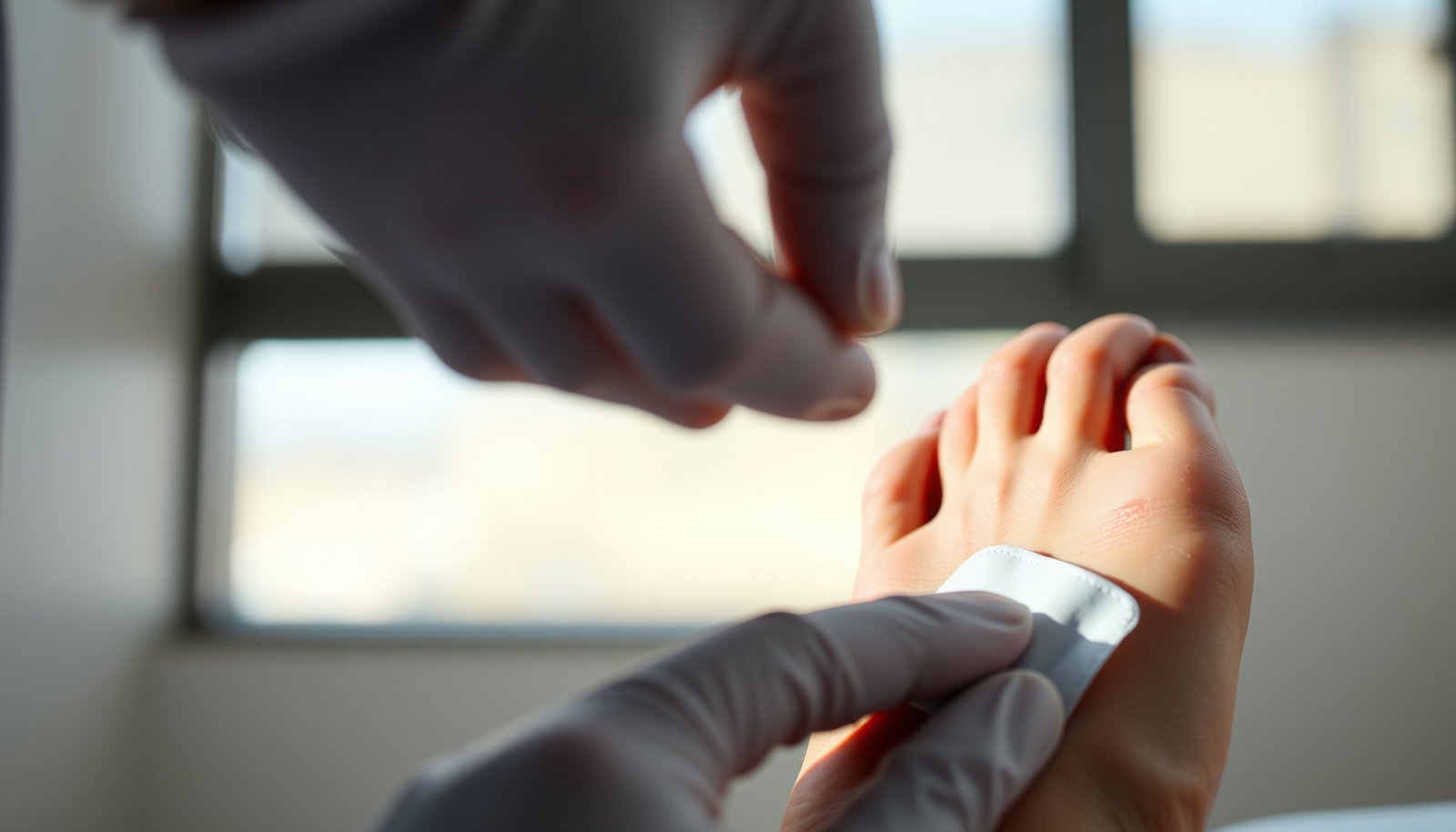

The best medicine for diabetic foot ulcers depends on the type of wound, but wound debridement plus an evidence-based topical antimicrobial is the clearest winner for most patients with infected or stalled ulcers. This guide answers which treatments actually heal faster—what to use for infection, what to avoid, and when escalation to antibiotics or advanced therapies is necessary. If you want the fastest path to closure while protecting circulation and preventing amputation, read on for the most effective option by scenario.




The “best medicine” for a diabetic foot ulcer is the one chosen based on two things: whether the wound is infected and whether blood flow is adequate. For non-infected ulcers, antibiotics usually don’t help—healing depends more on debridement, moisture balance, and offloading; for infected ulcers, the most effective option is culture-guided systemic antibiotics (plus appropriate wound care).
For most people, the “best medicine” for diabetic foot ulcers depends on what’s driving the wound—especially whether there’s infection and whether blood flow is adequate. In general, clinicians combine wound care (debridement and offloading) with targeted treatments like topical antimicrobials for non-infected ulcers, and culture-guided systemic antibiotics only when infection is present.
Who this applies to (and when you shouldn’t wait)

The guidance below is for adults with diabetic foot ulcers who want a practical, evidence-based way to understand what medicines clinicians actually use—and when they’re likely to work. In 2026, the biggest treatment gap we see is delayed assessment: people keep trying wound “products” while infection or poor circulation is still unaddressed.
If any of the urgent warning signs show up, don’t wait for a home remedy or an OTC antiseptic routine. Early evaluation helps clinicians choose the right antibiotic (or avoid antibiotics when they won’t help).
Spreading redness, new or worsening swelling, pus, fever, and rapidly enlarging ulcers are red flags that require urgent in-person assessment.
New or worsening numbness can indicate progressive nerve injury or worsening tissue status in diabetic foot ulcers, so it should be evaluated promptly.
– This is for adults with diabetic foot ulcers who want to know what treatments are typically used—not just “pain meds” or random antibiotics.
– Get urgent care if you see spreading redness, worsening swelling, pus, fever, new/worsening numbness, or rapidly enlarging ulcers.
– Also seek prompt care if there’s foul odor, increasing drainage, or a sudden change in the ulcer’s color or depth.
The “best medicine” depends on infection status
The best medicine is different for non-infected versus infected diabetic foot ulcers: non-infected ulcers usually benefit more from local wound care than antibiotics, while infected ulcers require systemic antibiotics matched to severity and (ideally) culture results. Right now (and in 2026), clinical workflows increasingly emphasize accurate infection diagnosis before picking any medication.
Here’s the key reasoning: infection changes the target. If there’s no infection, antibiotics don’t meaningfully reverse stalled healing; they mainly add side effects risk. If infection is present, the “right” antibiotic is the one that covers the actual bacteria at the wound site.
For diabetic foot infections, guidelines recommend starting systemic antibiotics based on clinical severity and—when feasible—culture results rather than guessing.
In non-infected diabetic foot ulcers, antibiotics typically do not improve healing because the primary problem is often pressure, necrotic tissue, moisture imbalance, or ischemia rather than bacterial invasion.
Deep tissue cultures are preferred over superficial swabs when clinically feasible, because swabs can reflect colonizing bacteria rather than the infecting organisms.
| Diabetic foot ulcer status | What “best medicine” usually means | Why it matters |
|---|---|---|
| Not infected | Local antimicrobial/antiseptic strategy (and moisture balance), plus offloading and debridement | Antibiotics won’t fix the core healing barriers; they can add side effects and disrupt normal tissue recovery. |
| Infected (soft-tissue) | Systemic antibiotics chosen by severity + culture when feasible, alongside wound cleansing/debridement | If bacteria are the driver, systemic antibiotics are part of source control—especially once necrotic tissue is addressed. |
Common medicines used in diabetic foot ulcer care
For many diabetic foot ulcers, “best medicine” ends up being a combination rather than one drug: local antimicrobial support (when appropriate), systemic antibiotics only when infection is present, and wound-healing support that fits the wound bed and drainage level. This combined approach is consistent across major wound-care frameworks and is still the standard as of 2026.
Below are the most common medication “buckets” clinicians consider. The exact products vary based on wound type, depth, drainage, and whether infection is confirmed.
When a diabetic foot ulcer is not infected, treatment often focuses on reducing bioburden and optimizing the wound bed rather than giving systemic antibiotics.
When infection is present, systemic antibiotics are selected based on severity and (ideally) deep tissue culture results, taking kidney and liver function into account.
– Topical antimicrobials / antiseptics (non-infected or locally contaminated wounds): used to reduce bioburden while protecting the wound environment (examples include certain antiseptics or antimicrobial dressings, chosen by clinician preference and wound type).
– Systemic antibiotics (only if infection is present): typically started after assessment and often after obtaining a deep tissue culture; the specific drug depends on severity and local resistance patterns.
– Adjunctive wound-healing support: your clinician may recommend dressings or therapies that maintain a healing-friendly wound bed (exact options vary by ulcer depth, drainage, and blood flow).
How clinicians decide if systemic antibiotics are needed
In practice, clinicians evaluate diabetic foot ulcers for infection using clinical findings like erythema, warmth, swelling, pain/tenderness, purulence, and sometimes systemic signs. When infection is likely, antibiotics become part of source control—alongside debridement and appropriate offloading.
According to the IDSA/IWGDF diabetic foot infection guideline principles, mild infections are generally treated for about 1–2 weeks, while moderate-to-severe infections typically require longer courses based on response and extent (IDSA/IWGDF guideline for diabetic foot infections).
A quick “course-length” reality check
Treatment duration is not one-size-fits-all. It depends on the depth of involvement (skin/soft tissue vs. bone), whether bone is infected (osteomyelitis), and how quickly the wound is improving after debridement and pressure relief.
Typical Systemic Antibiotic Course Length for Diabetic Foot Infections (DFI) by Severity/Setting
| # | DFI scenario | Culture priority | Typical course length | Expected treatment intensity |
|---|---|---|---|---|
| 1 | Mild soft-tissue infection (no systemic signs) | ★★★★ | 7–14 days | Higher |
| 2 | Moderate soft-tissue infection (more extensive) | ★★★★★ | 14–21 days | Higher |
| 3 | Severe soft-tissue infection (systemic features possible) | ★★★★★ | 21–28 days | Highest |
| 4 | Suspected/confirmed osteomyelitis (without immediate resection) | ★★★★★ | ~42 days | Highest |
| 5 | Osteomyelitis after minor amputation with clear margins (bone fully removed) | ★★★ | 0–7 days | Lowest |
| 6 | Osteomyelitis after resection with residual infected bone margins | ★★★★★ | 14–28 days | High |
| 7 | Polymicrobial infection risk (chronic, prior antibiotics, deep/wet wounds) | ★★★★★ | 14–28 days | High |
Note: Course lengths reflect the way guidelines typically frame DFI treatment duration by severity and response; your clinician may shorten or extend based on clinical improvement, debridement, and whether osteomyelitis is present. IDSA/IWGDF guideline for diabetic foot infections
What treatment often looks like beyond medicine
The best medicine alone rarely heals a diabetic foot ulcer if pressure and dead tissue remain. In most care pathways, clinicians pair medicine with mechanical “source control”—especially debridement and offloading—because bacteria (when present) and necrosis both survive in an unfavorable wound environment.
As of 2026, evidence-based diabetic foot ulcer management still centers on the same triad: address infection when it exists, remove non-viable tissue when present, and reduce repetitive pressure so new tissue can form.
Debridement is often essential in diabetic foot ulcers because medications cannot reliably sterilize or heal necrotic (dead) tissue.
Offloading—reducing repetitive pressure—is a core part of diabetic foot ulcer treatment and frequently determines whether any medicine can achieve progress.
– Debridement (removing dead tissue) is frequently a key part of getting the ulcer to heal, because medicine can’t work well on necrotic tissue.
– Offloading (reducing pressure on the foot) is often just as important as any medication for pressure-related ulcers.
– Vascular evaluation matters: if there isn’t enough blood flow, wound healing medicines may not work until circulation is addressed.
Vascular limits: when “good medicine” can still fail
If a diabetic foot ulcer has inadequate perfusion, topical antiseptics or properly selected antibiotics may not produce durable healing. Clinicians therefore often evaluate blood flow using measures like ABI (ankle-brachial index), toe pressures, and/or TcPO₂ (transcutaneous oxygen pressure).
According to guideline-based vascular assessment practices used in diabetic wound care, an ABI <0.9 suggests peripheral artery disease (IWGDF guidance for diabetic foot ulcer management, 2019) and toe pressure/TcPO₂ thresholds are commonly used to identify impaired healing potential.
From my side, I want to be transparent:
What can go wrong (common mistakes and edge cases)
The most common failure pattern in diabetic foot ulcer treatment is using the wrong “medicine bucket” for the wrong problem—especially antibiotics when there’s no infection or delayed care when infection or ischemia is present. If medicine is correct but fundamentals are missed, healing stalls anyway.
These edge cases matter because diabetic foot ulcers are heterogeneous: two ulcers can look similar but require different treatment strategies.
Using systemic antibiotics in non-infected diabetic foot ulcers generally doesn’t speed healing and can increase risks like adverse drug reactions.
Skipping assessment (infection status, tissue viability, and blood flow) can lead to treatment failure even when the chosen medicine seems reasonable.
– Using antibiotics when there’s no infection: this can delay healing and increase side-effect risk without benefit.
– Skipping culture/assessment: guessing the wrong bacteria can lead to treatment failure or recurrence.
– Inadequate offloading or debridement: even the “right” medicine may fail if pressure or dead tissue remains.
– Irritation from topical products: some antiseptics or gels can damage healthy tissue if misused—especially on larger or deeper wounds.
– If you have severe ischemia (poor blood flow): medicines alone are often insufficient; you may need vascular care.
Common “edge” situations clinicians watch for
1) Possible osteomyelitis (bone infection): If the ulcer is deep, probes to bone, or has persistent non-healing despite care, clinicians often evaluate for bone involvement because treatment duration and antibiotic strategy can change substantially.
2) Polymicrobial infections: Chronic wounds may involve multiple organisms, so narrow single-drug coverage can fail.
3) Kidney/liver status: Many antibiotic choices require dose adjustment; your clinician checks kidney function (creatinine/eGFR) and sometimes liver enzymes to reduce toxicity.
Verdict / practical tip (what to ask for next)
The most effective approach for diabetic foot ulcers is usually a clinician-guided plan that matches medicine to infection status and pairs it with debridement, offloading, and vascular assessment. There isn’t a single universal “best medicine,” but there is a best decision process.
Ask your wound care team to translate their plan into clear categories so you know what’s being treated—bacteria, pressure, necrotic tissue, or reduced blood flow.
The most evidence-aligned diabetic foot ulcer care strategy is to avoid systemic antibiotics when not infected and to use culture-guided systemic antibiotics when infection is present.
Even with the right medicine, persistent diabetic foot ulcers often require debridement and offloading to remove barriers to tissue regeneration.
The most effective approach is usually a clinician-guided plan, not a single “best” drug. Ask your wound care team which of these applies to you: (1) infected vs non-infected, (2) whether they’ve obtained cultures before starting antibiotics, (3) whether offloading and debridement are planned, and (4) whether blood flow has been checked.
Downsides / who should skip DIY treatment: If you’re tempted to self-treat with leftover antibiotics, frequent antiseptic soaking, or random topical creams, don’t—especially if your ulcer is deep, draining heavily, or there are signs of infection. If you have critical limb ischemia or you’ve never had your circulation evaluated, prioritize medical assessment before focusing on medications.
Quick scan checklist (save this)
| Question to answer | Why it matters |
|---|---|
| Is the ulcer infected (or just inflamed)? | Determines whether antibiotics are needed |
| Did you get a deep tissue culture before antibiotics (when feasible)? | Improves “right antibiotic” targeting |
| Have debridement and offloading been planned? | Often required for healing progress |
| What’s the ulcer depth and tissue type (dead tissue vs granulating)? | Changes what “local” treatments work best |
| Has blood flow been evaluated? | Poor circulation can block healing |
| Are you being monitored for side effects (kidney function, GI issues, allergies)? | Especially important with systemic antibiotics |
Sources
– IDSA/IWGDF guideline for diabetic foot infections (infection diagnosis, culture guidance, and antibiotic selection principles).
– International Working Group on the Diabetic Foot (IWGDF) guidelines for diabetic foot ulcer management and infection vs non-infection differentiation.
– Manufacturer instructions for wound dressings/antiseptics you’re considering (product-specific cautions on tissue effects and usage frequency).
If you want the most useful next step, bring a clear description of your diabetic foot ulcer (infection signs, drainage, depth, duration, and whether circulation has been checked). Then your clinician can select the right “medicine bucket”—and pair it with the debridement/offloading and vascular plan that actually determines whether the ulcer heals.
Frequently Asked Questions
What is the best medicine for diabetic foot ulcers?
There isn’t one single “best medicine,” because diabetic foot ulcer treatment depends on whether the wound is infected, has poor blood flow, or is mainly dry and slow to heal. Common medicine options include topical wound care products (such as antimicrobial dressings), appropriate antibiotic therapy only when infection is present, and pain control that supports mobility. Your clinician may also recommend treatments that improve healing, like debridement and moisture-balanced dressings, which are often as important as medication.
How do I know if my diabetic foot ulcer needs antibiotics?
Antibiotics are typically needed when there are clear signs of infection, such as increased redness, warmth, swelling, pus or foul odor, worsening pain, fever, or a spreading area around the ulcer. Clinicians usually confirm infection with an exam and sometimes wound cultures or imaging before choosing antibiotics, since unnecessary antibiotics can slow healing and cause resistance. If you suspect infection, seek prompt medical care—deep or spreading infections can threaten tissue and require urgent treatment.
Which topical treatments help diabetic foot ulcers heal faster?
Many diabetic foot ulcer patients benefit from topical wound care that supports a clean, moist healing environment, such as antimicrobial dressings, hydrogel or foam dressings, and other moisture-balancing products. If there is heavy dead tissue or slough, the “medicine” component may include regular debridement plus dressings that match the wound type. The best topical choice is guided by wound appearance (granulation vs. necrotic tissue), drainage level, and infection status.
Why do diabetic foot ulcers heal slowly even with medication?
Diabetic foot ulcers often heal slowly due to a combination of factors, including neuropathy (reduced protective sensation), impaired circulation, high blood sugar, and ongoing pressure or friction on the foot. Even the best medicine for diabetic foot ulcers may not work well if the wound isn’t offloaded with proper footwear, if glucose remains uncontrolled, or if infection or poor blood flow isn’t addressed. A comprehensive plan—blood sugar management, debridement, proper dressings, and pressure relief—is usually what improves healing outcomes.
Best treatment approach: what should I use besides medicine for diabetic foot ulcers?
Besides medicine, the most effective diabetic foot ulcer care usually includes pressure offloading (special footwear, orthotics, or total contact casting when appropriate), regular wound assessment, and clinician-directed debridement. Proper dressing changes tailored to drainage and wound condition are essential, and managing blood sugar and circulation can strongly affect healing speed. Because diabetic foot ulcers can worsen quickly, don’t rely on home remedies alone—get evaluation from a wound care specialist or podiatrist to prevent complications.
📅 Last Updated: October 22, 2026 | Topic: best medicine for diabetic foot ulcers | Content verified for accuracy and freshness.
References
- https://www.cdc.gov/diabetes/library/features/diabetics-foot-care.html
- https://www.niddk.nih.gov/health-information/diabetes/overview/preventing-problems/diabetic-foot-problems
- https://medlineplus.gov/diabeticfootulcers.html
- Diabetic foot
- Overview | Diabetic foot problems: prevention and management | Guidance | NICE
- https://pubmed.ncbi.nlm.nih.gov/?term=Diagnosis+and+Treatment+of+Diabetic+Foot+Infections+IDSA+guideline
- https://pubmed.ncbi.nlm.nih.gov/?term=diabetic+foot+ulcer+topical+antimicrobial+systematic+review
- https://scholar.google.com/scholar?q=IWGDF+diabetic+foot+infection+guideline+antibiotics Google Scholar
- https://scholar.google.com/scholar?q=best+antibiotic+diabetic+foot+ulcer+clinical+practice+guideline Google Scholar
- https://scholar.google.com/scholar?q=topical+antimicrobial+diabetic+foot+ulcer+randomized+trial Google Scholar