

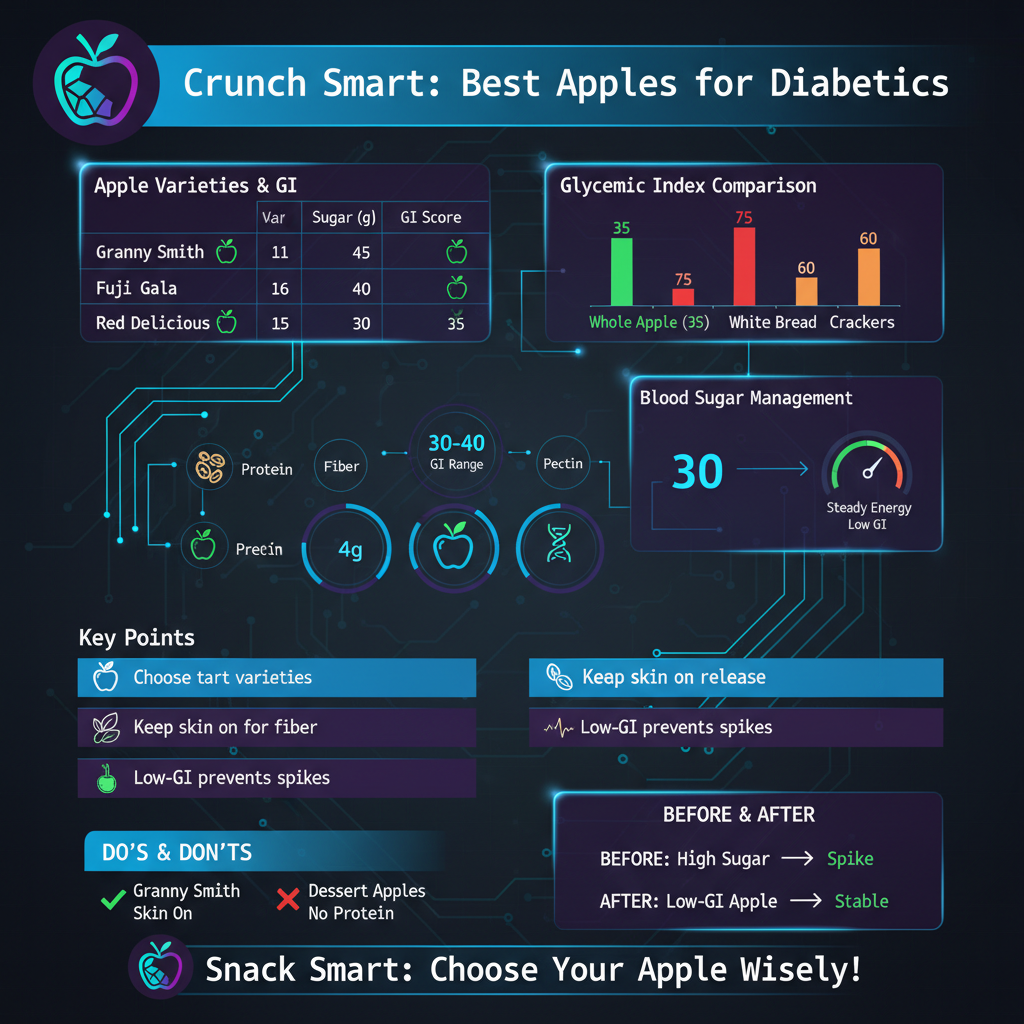
The best apples for diabetics are generally tart varieties like Granny Smith, which typically have a lower sugar content and glycemic index compared to sweeter options. While most fresh apples are safe when eaten in moderation, keeping the skin on is crucial for maximizing fiber intake, which helps slow down sugar absorption. For the best blood sugar management, always pair your apple with a protein or healthy fat, such as peanut butter or a handful of nuts. Navigating the produce aisle when you are living with diabetes can sometimes feel like a bit of a puzzle. Fruit is healthy, right? But it also contains sugar. It’s a common dilemma, but the good news is that you absolutely don’t have to give up this crunchy, refreshing snack. By understanding which varieties work with your body rather than against it, you can enjoy apples as a staple part of your diet.



Why Apples Are a Diabetes-Friendly Superfood
Many people assume that because fruit is sweet, it must be off-limits for blood sugar management. However, apples are actually one of the most beneficial fruits you can eat, thanks to their unique structural makeup. They aren’t just empty sugar; they are complex packages of nutrition.
– Apples contain pectin, a type of soluble fiber that helps regulate blood sugar levels by slowing digestion.
Pectin is a powerhouse ingredient found in the cell walls of plants. When you consume it, it dissolves in water to form a gel-like substance in your gut. This gel slows down the rate at which your stomach empties, meaning that the carbohydrates from the apple enter your bloodstream at a much slower, more controlled pace. Instead of a sugar rush, you get a steady release of energy. This can help you feel fuller for longer, aiding in weight management—another crucial factor in managing type 2 diabetes.
– Most fresh apples have a low to moderate Glycemic Index (GI), meaning they won’t cause rapid spikes in glucose compared to other carbohydrates.
The Glycemic Index is a tool that measures how quickly food raises blood sugar levels on a scale of 0 to 100. Most whole apples fall somewhere between 30 and 40 on this scale. To put that in perspective, white bread or crackers can be well over 70. Because apples are low-GI foods, they are considered a “slow carb.” This makes them a safe and smart choice for a mid-afternoon snack when your energy is dipping, as they provide a lift without the subsequent crash.
Top Low-Sugar Apple Varieties to Choose

Not all apples are created equal. Over the years, agriculture has shifted toward breeding sweeter, dessert-like apples. However, for those monitoring their glucose, sticking to heritage-style or tart varieties is the winning strategy. Here are the top picks that generally have the least impact on blood sugar.
– Granny Smith: Known for their tartness, these green apples are widely considered the best option due to their lower sugar content.
If you take one thing away from this guide, let it be the power of the green apple. Granny Smiths are the gold standard for diabetic-friendly fruits. Their distinct sour pucker is a direct indicator that they contain less fructose than their red counterparts. A medium-sized Granny Smith contains roughly 13-14 grams of sugar, whereas sweeter varieties can contain upwards of 19-20 grams. They are crisp, refreshing, and hold up beautifully in salads if you find them too tart to eat on their own.
– Red Delicious: These apples are not only lower in sugar but also high in anthocyanins, an antioxidant that may improve insulin sensitivity.
While they have fallen out of favor slightly in the culinary world due to their softer texture, Red Delicious apples are nutritional heavyweights. The deep, dark red color of their skin is a visual signal of high antioxidant content. Specifically, they are rich in anthocyanins, which studies suggest can help improve how your body processes insulin. If you enjoy a milder, less acidic flavor profile but want to keep the sugar count reasonable, this is a fantastic option.
– McIntosh: A balanced choice that offers a milder flavor without the excessive fructose found in modern dessert apples.
The McIntosh is a classic New England apple that strikes a lovely balance. It isn’t as aggressively sour as a Granny Smith, but it lacks the cloying sweetness of modern varieties. It has a tender white flesh and a moderate fiber content. It’s a great “middle of the road” apple for those who want a traditional apple taste without spiking their glucose monitor.
Sweeter Apples to Consume in Moderation
We all love a sweet treat now and then, and some of the most popular apples in the grocery store are incredibly delicious. You don’t have to ban these completely, but you should view them more like a dessert than a free-for-all snack. Treat these varieties with a bit of extra caution.
– Fuji and Honeycrisp: While delicious, these varieties have significantly higher sugar levels and should be eaten in smaller portions.
Honeycrisp and Fuji apples are engineered for maximum sweetness and crunch, which is why they are so popular. However, a large Honeycrisp can contain nearly 20 grams of sugar or more depending on its size. If you love these, try slicing the apple in half and saving the rest for later, or sharing it with a friend. Portion control is your best tool here.
– Pink Lady: These are high in sugar but also high in acidity; monitor your blood sugar response if choosing this variety.
Pink Ladies (or Cripps Pink) are deceptive. They are quite tart, which might lead you to believe they are low in sugar like the Granny Smith. However, they are actually very high in sugar; the sweetness is just masked by high acidity. They are a delicious, firm apple, but make sure to test your sugars after eating one to see how your specific body reacts to them.
The Importance of Eating the Skin
If you are in the habit of peeling your apples, you might be accidentally turning a healthy snack into a sugary one. The peel is arguably the most important part of the fruit for someone with diabetes.
– The majority of an apple’s fiber and antioxidants are found in the peel, not the flesh.
Nature packaged apples perfectly. The flesh provides hydration and volume, but the skin provides the nutrients. A massive portion of the apple’s insoluble fiber, vitamin C, vitamin A, and quercetin (a flavonoid beneficial for heart health) resides in that thin outer layer. When you throw away the peel, you are throwing away the very nutrients that help manage your condition.
– Peeling an apple raises its Glycemic Index, turning a slow-digesting snack into a faster-acting carbohydrate.
Think of the skin as a physical barrier that your digestive system has to break down. This effort takes time. When you remove the skin, your body can access the sugars in the flesh much faster, leading to a quicker rise in blood glucose. A peeled apple behaves more like apple juice in the body than whole fruit. For the best glycemic control, wash the apple thoroughly and enjoy it whole.
Best Food Pairings to Stabilize Blood Sugar
One of the best “hacks” for eating carbs with diabetes is to never eat them “naked.” By clothing your carbs with protein and fat, you change the metabolic response of the meal.
– Combine apple slices with natural peanut butter, almond butter, or walnuts to blunt the glucose spike.
Fats are slow to digest. When you eat an apple with a tablespoon of peanut butter or a handful of walnuts, the fat coats the stomach and slows down the absorption of the fruit sugars. Plus, the combination of salty, savory nuts with sweet, crisp apples is gastronomically satisfying. Just be mindful of the portion size of the nut butter to keep calories in check.
– Eat apples alongside a piece of cheese or plain Greek yogurt to add protein to your snack.
If you aren’t a fan of nuts, dairy is an excellent alternative. A slice of sharp cheddar cheese or a cup of plain, unsweetened Greek yogurt provides a significant protein boost. Protein, like fat, helps stabilize blood sugar and increases satiety. This combination transforms a simple fruit snack into a mini-meal that can keep you fueled for hours.
Fresh Fruit vs. Juice and Sauce
Finally, it is vital to distinguish between whole fruit and processed fruit products. In the world of diabetes management, processing is usually the enemy.
– Stick to whole, fresh apples and avoid apple juice, which lacks fiber and concentrates sugar, leading to rapid spikes.
It takes about three to four apples to make one cup of juice. When you drink juice, you are consuming the sugar of four apples in seconds, with zero fiber to slow it down. This hits the bloodstream almost immediately, causing a rapid spike followed by a crash. For a diabetic, fruit juice functions very similarly to soda.
– Be cautious with applesauce; even “unsweetened” versions digest much faster than chewing a whole raw apple.
While unsweetened applesauce is better than juice, it is still pre-digested. The mechanical breakdown of the fruit means your body has very little work to do to extract the sugar. Chewing a raw apple signals your body to prepare for digestion and takes time; slurping applesauce does not. If you do eat applesauce, ensure it is strictly unsweetened and eat it as part of a meal containing protein and fiber, rather than on its own.
Apples can be a delicious and healthy part of a diabetic diet when you choose the right varieties and preparation methods. Focus on tart apples like Granny Smith, always eat the peel to maximize fiber, and pair your fruit with protein for stable energy levels. If you are unsure how specific fruits affect you, test your blood sugar two hours after eating to determine the best portion size for your body. By making these small, strategic adjustments, you can continue to enjoy the crunch of a fresh apple without compromising your health goals.
Frequently Asked Questions
Which apple varieties are considered the best for people with diabetes?
The best apples for diabetics are typically tart varieties like Granny Smith, as they contain less sugar and have a lower glycemic index compared to sweeter types. Other excellent options include Braeburn and Macintosh apples, which offer a balanced flavor profile without excessive natural sugars. Choosing these lower-sugar varieties helps prevent rapid spikes in blood glucose levels while still allowing you to enjoy fresh fruit.
Do green apples affect blood sugar levels differently than red apples?
Yes, green apples, specifically Granny Smith, generally have a lower sugar content and a lower glycemic index than sweet red varieties like Fuji or Gala. Because they contain less fructose and slightly more fiber, green apples digest more slowly, resulting in a more gradual rise in blood sugar rather than a sharp spike. However, portion size remains critical regardless of the apple’s color.
Why is it important to eat the skin of the apple for diabetes management?
The skin of the apple contains the majority of the fruit’s dietary fiber and antioxidants, which are crucial for regulating how your body absorbs sugar. Fiber acts as a buffer that slows down digestion, preventing glucose from entering the bloodstream too quickly after eating. Peeling an apple removes this protective barrier and significantly raises the fruit’s glycemic load, making it less suitable for blood sugar control.
How can I prevent blood sugar spikes when eating apples?
To minimize blood sugar spikes, you should pair your apple with a source of healthy fat or protein, such as natural peanut butter, a handful of walnuts, or a slice of cheese. This combination slows down the digestion of carbohydrates, leading to a more stable glucose release compared to eating the fruit on an empty stomach. Additionally, sticking to one small-to-medium apple per serving ensures you stay within your carbohydrate limits.
Is apple juice or applesauce a safe alternative to whole apples for diabetics?
Generally, diabetics should avoid apple juice and sweetened applesauce because they lack the necessary fiber found in whole fruit and are often concentrated with sugar. Liquid carbohydrates digest extremely fast, causing rapid and often dangerous spikes in insulin and blood glucose levels. If you must have applesauce, opt for an unsweetened variety and eat it in moderation, but the whole, unpeeled fruit is always the superior choice for glycemic control.
References
- Apples • The Nutrition Source
- https://diabetes.org/food-nutrition/eating-healthy/fruit
- https://health.clevelandclinic.org/best-fruits-for-diabetes
- Diabetes diet: Should I avoid sweet fruits? – Mayo Clinic
- https://www.ncbi.nlm.nih.gov/pmc/articles/PMC442131/
- Fruit, vegetables and diabetes | Eating with diabetes | Diabetes UK
- Fruit and Vegetable Guide Series: Apples | USU

Pingback: Best Soda for Diabetics: Top Choices & Considerations - Best For Diabetics
Pingback: Best Foods to Eat for Type 2 Diabetes Management - Best For Diabetics
Pingback: Best Diet Program for Diabetics - Best For Diabetics
Pingback: Best Diabetic Breakfast Choices: Healthy Options - Best For Diabetics
Pingback: Best Breakfast Cereal for Diabetics: What to Look For - Best For Diabetics
Pingback: Best Bread to Eat for Diabetics: Healthy Options - Best For Diabetics
Pingback: 10 Best Diabetic Foods to Eat - Best For Diabetics
Pingback: What is the Best Salad Dressing for Diabetics? - Best For Diabetics
Pingback: What is the Best Milk for Diabetics: A Guide - Best For Diabetics
Pingback: The Best Way to Prevent Diabetes: Essential Steps - Best For Diabetics