

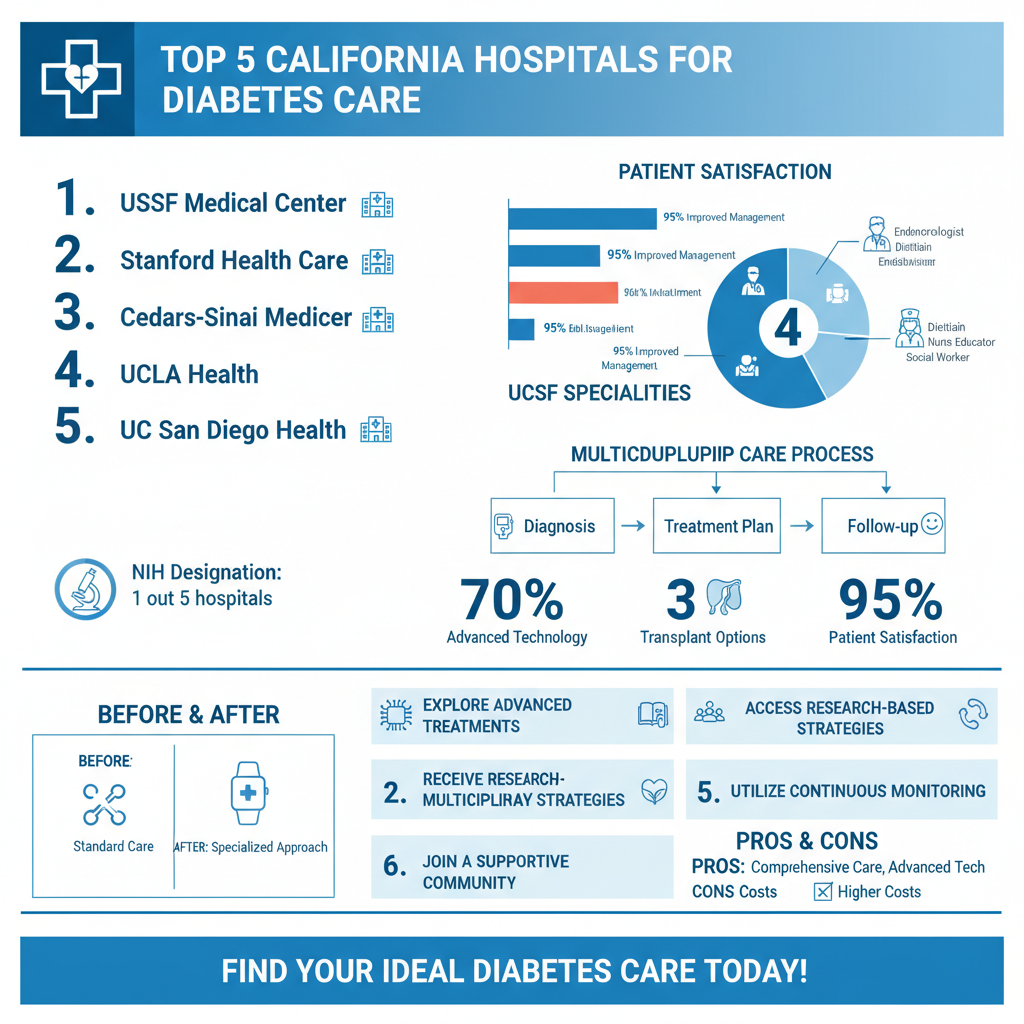
California is home to some of the nation’s leading endocrinology departments, with the top 5 hospitals for diabetes typically being UCSF Health, Stanford Health Care, Cedars-Sinai Medical Center, UCLA Medical Center, and UC San Diego Health. These institutions are consistently ranked high for their specialized treatment programs, advanced research, and patient outcomes. Navigating a diabetes diagnosis or managing a chronic condition can be overwhelming, but living in California gives you a distinct advantage: access to world-class medical innovation. This guide explores the specific strengths of each facility to help you find the best care for your needs, ensuring you have the support required to live a healthy, active life.




1. UCSF Health (San Francisco)

When it comes to comprehensive diabetes care in Northern California, UCSF Health in San Francisco stands out as a true pioneer. At the heart of their success is the UCSF Diabetes Center, which has earned the prestigious designation as a National Institutes of Health (NIH) Diabetes Research Center. This isn’t just a fancy title; it means that the care you receive is backed by federally funded, cutting-edge research. Patients here aren’t just treated with standard protocols; they benefit from an environment where scientists and doctors are actively working to cure the disease.
One of the most comforting aspects of UCSF’s approach is their commitment to multidisciplinary care. Managing diabetes is rarely just about checking blood sugar and taking medication; it involves a complex interplay of diet, mental health, and lifestyle adjustments. UCSF addresses this by assigning you a team that goes beyond just an endocrinologist. You will likely work with certified diabetes educators, nutritionists who understand the nuances of glycemic index, and nurses specialized in diabetes management. This integrated model ensures that you leave appointments not just with a prescription, but with a sustainable life plan.
Furthermore, UCSF is renowned for its specialized scope. They offer distinct programs tailored specifically for Type 1 and Type 2 diabetes, recognizing that these are fundamentally different conditions requiring different strategies. For patients with complex or severe cases, UCSF is also a leader in transplant options, including kidney and pancreas transplants. Their expertise in islet autotransplantation offers hope for those suffering from chronic pancreatitis, showcasing their ability to handle the most difficult medical challenges with compassion and skill.
2. Stanford Health Care (Stanford)

Located in the heart of Silicon Valley, it comes as no surprise that Stanford Health Care is the go-to destination for patients interested in the intersection of medicine and technology. The Stanford Endocrinology Clinic is famous for embracing the latest advancements in diabetes tech. If you are interested in continuous glucose monitoring (CGM) systems that talk directly to your smartphone, or the latest closed-loop insulin pump systems (often called the “artificial pancreas”), Stanford is where you want to be. Their providers are incredibly tech-savvy and can help you interpret the massive amounts of data these devices generate to fine-tune your control.
Beyond the gadgets, Stanford is a heavyweight in the world of clinical trials. Because they are a premier academic medical center, they often have access to new medications and therapies years before they become available to the general public. For a patient who feels like they have “tried everything” with limited success, Stanford offers a unique pathway to experimental treatments that could be game-changers. Participating in a trial here means you are on the front lines of medical history, receiving care that is pushing the boundaries of what is possible.
Another standout feature of Stanford’s program is its holistic view of the diabetic body, specifically regarding cardiovascular health. Diabetes significantly increases the risk of heart disease, a fact that Stanford takes very seriously. They have specialized programs that closely link endocrinology with cardiology. This preventive approach is vital; by managing your heart health proactively alongside your blood sugar, the team at Stanford helps prevent one of the most serious long-term complications of the disease, ensuring you stay healthier for longer.
3. Cedars-Sinai Medical Center (Los Angeles)

Moving down to Southern California, Cedars-Sinai Medical Center offers a blend of luxury care and medical excellence that is hard to beat. Their diabetes services are anchored by the Coachman Family Center for Diabetes. The “Family” in the name is intentional; the atmosphere here is warm, welcoming, and deeply personal. They move away from the “one-size-fits-all” model of healthcare. Instead, they focus on creating personalized care plans that respect your daily routine, your cultural dietary preferences, and your personal health goals. They understand that a strict regimen that makes you miserable is a regimen you won’t stick to, so they work with you to find a balance.
The hospital’s reputation is backed by data, as they are consistently highly ranked in U.S. News & World Report for diabetes and endocrinology. This ranking reflects their high success rates in patient outcomes and safety. When you choose Cedars-Sinai, you are choosing an institution that is recognized nationally for excellence. This level of care provides peace of mind, knowing that you are in the hands of some of the best specialists in the country.
Perhaps one of the most supportive aspects of Cedars-Sinai is their robust emphasis on education and community. They offer extensive patient education workshops and support groups. Diabetes can feel like a lonely burden, but at Cedars, you are encouraged to connect with others facing similar challenges. These groups cover everything from emotional support to practical lifestyle management tips, such as navigating restaurant menus or managing blood sugar during exercise. This community-centric approach empowers you to take charge of your health with a cheerleading squad behind you.
4. UCLA Medical Center (Los Angeles)
UCLA Medical Center is another giant in the Los Angeles healthcare landscape, providing a sanctuary for those dealing with complex diabetes cases. The Gonda (Goldschmied) Diabetes Center serves as their hub, offering a seamless blend of inpatient and outpatient services. This continuity of care is crucial. If you are hospitalized for a diabetes-related emergency, the transition back to outpatient maintenance is handled by the same overarching team, preventing the communication gaps that often happen in fragmented healthcare systems.
UCLA is particularly exceptional in its integrated approach to managing complications. Diabetes is a systemic disease that can affect the eyes (retinopathy), kidneys (nephropathy), and feet (neuropathy/circulation issues). UCLA has effectively created a “one-stop-shop” environment where endocrinologists collaborate closely with ophthalmologists, nephrologists, and podiatrists. By catching these complications early through rigorous screening and coordinated care, they can often prevent the progression of damage, saving sight and mobility.
Additionally, UCLA has carved out a niche in specific sub-specialties that deserve attention. They have specific expertise in gestational diabetes, providing expectant mothers with the tight glycemic control needed to ensure a healthy pregnancy and a healthy baby. They also strongly integrate weight management into their diabetes care. Recognizing that weight loss can sometimes put Type 2 diabetes into remission, they offer medical weight management programs and coordinate with bariatric surgery teams when appropriate, offering a path toward potentially reversing the disease.
5. UC San Diego Health (San Diego)
For those in the southernmost part of the state, UC San Diego Health offers a premier destination for diabetes management, centered around the renowned Whittier Institute for Diabetes. The vibe at UCSD is one of empowerment. They don’t just treat you; they teach you. This is evident in their strong alignment with “Taking Control of Your Diabetes” (TCOYD) philosophies. The goal here is to transform the patient from a passive recipient of healthcare into an active expert on their own body.
The Whittier Institute is famous for its robust patient support systems. They understand that the hour you spend in the doctor’s office is less important than the hundreds of hours you spend managing the disease on your own. Consequently, their education programs are some of the best in the nation, breaking down complex medical concepts into actionable, daily habits. They provide the tools and confidence you need to handle sick days, travel, and social events without your blood sugar spiraling out of control.
On the research front, UC San Diego Health is a global leader in islet cell transplantation and immunology. This is the frontier of a biological cure for Type 1 diabetes. Their researchers are deeply involved in understanding how to stop the immune system from attacking insulin-producing cells and how to successfully transplant new cells. For patients who are interested in the science of a cure, UCSD offers a front-row seat to some of the most exciting developments in the field of immunology.
How to Choose the Right Diabetes Hospital
With so many incredible options in California, making a final choice can still feel difficult. To help streamline your decision, here is a practical checklist to guide your selection process:
* Check Your Insurance: Before anything else, verify coverage. The “best” hospital is of no use if it is out-of-network and unaffordable. Call your provider to confirm which of these top centers are covered under your plan.
* Location and Logistics: Diabetes management requires frequent visits, especially initially. Consider the commute. If you live in San Diego, driving to UCLA might be sustainable for a one-time surgery but stressful for monthly check-ups.
* Look for the CDCES Credential: When reviewing the team, look for “Certified Diabetes Care and Education Specialists” (CDCES). These professionals have specialized training specifically in teaching you how to live with diabetes. A hospital with a high number of CDCES staff usually prioritizes patient education.
* Match the Specialization to Your Type: Ensure the hospital has a strong track record for your specific condition. If you have Type 1, look for a center with a strong focus on insulin pumps and immunology (like UCSF or UCSD). If you are pregnant, look for a center with a strong gestational diabetes program (like UCLA).
* Review the “Vibe”: Do you want a high-tech, data-driven approach (Stanford), or do you prefer a warmer, family-oriented support system (Cedars-Sinai)? Your comfort with the care team’s philosophy is essential for long-term success.
Managing diabetes effectively requires a partnership with a medical team that understands the complexities of the disease. Whether you are in Northern or Southern California, institutions like UCSF, Stanford, Cedars-Sinai, UCLA, and UC San Diego offer world-class care designed to improve your quality of life. Review your insurance options and schedule a consultation with one of these top-rated facilities to begin your journey toward better health management today.
Frequently Asked Questions
Which California hospitals are ranked highest for diabetes and endocrinology care?
According to U.S. News & World Report rankings, the top-performing facilities for diabetes typically include Cedars-Sinai Medical Center, Stanford Health Care, UCLA Medical Center, UCSF Health, and Scripps La Jolla Hospitals. These institutions are consistently recognized for their high survival rates, advanced patient safety measures, and successful management of complex endocrine disorders.
What specific criteria make a hospital a top choice for diabetes treatment?
A top-tier diabetes hospital is defined by its multidisciplinary approach, combining board-certified endocrinologists, nutritionists, and certified diabetes educators (CDEs) into one care team. Furthermore, these leading medical centers offer access to cutting-edge clinical trials, advanced continuous glucose monitoring (CGM) technology, and specialized programs for preventing complications related to kidney and heart health.
Where can I find the best pediatric diabetes care in California?
For children and adolescents, Children’s Hospital Los Angeles and UCSF Benioff Children’s Hospitals are widely considered the premier destinations for pediatric endocrinology. These facilities provide age-specific care that focuses on the unique physiological and emotional needs of growing children, including specialized support for Type 1 diabetes management and insulin pump therapy.
Do I need a referral to see a specialist at these top California diabetes centers?
Most highly-ranked academic medical centers and research hospitals require a referral from a primary care physician to ensure the patient needs specialized endocrinology care. However, requirements vary by insurance plan (HMO vs. PPO), so it is crucial to contact the hospital’s patient registration department and your insurance provider to verify authorization protocols before scheduling an appointment.
What advanced treatments are available at California’s top 5 diabetes hospitals?
Leading California hospitals often provide access to treatments not available at standard clinics, such as islet cell transplantation trials and the latest closed-loop insulin delivery systems. Patients at these centers benefit from a research-driven environment that utilizes genetic testing for rare diabetes types and aggressive therapies to mitigate long-term neuropathy and retinopathy risks.
References
- Best Hospitals for Diabetes & Endocrinology in California | Rankings & Ratings | US News Best Hos…
- https://www.newsweek.com/rankings/worlds-best-specialized-hospitals-2024/endocrinology
- https://www.ucsfhealth.org/specialties/diabetes-care
- https://www.cedars-sinai.org/programs/diabetes-and-endocrinology.html
- https://www.uclahealth.org/medical-services/diabetes
- Endocrinology Clinic | Stanford Health Care
- https://www.scripps.org/services/diabetes-and-endocrinology
- Endocrinology, Diabetes and Metabolism | Department of Internal Medicine | UC Davis Health
- https://www.keckmedicine.org/places-of-care/usc-endocrine-diabetes-and-metabolism-center/



Pingback: Best Foods for Diabetics to Eat: A Healthy Guide - Best For Diabetics
Pingback: Best Cereal for Cholesterol and Diabetes: Smart Choices - Best For Diabetics
Pingback: What is the Best Yogurt for Diabetics? - Best For Diabetics
Pingback: Best Soups for Diabetics: Healthy Choices and Tips - Best For Diabetics